


**Affiliate Disclosure**
Please note that some of the links on this site are affiliate links, and at no additional cost to you, we may earn a commission if you decide to make a purchase after clicking through the link. Any commission we make is income for the work put into supplying the information presented on this website.
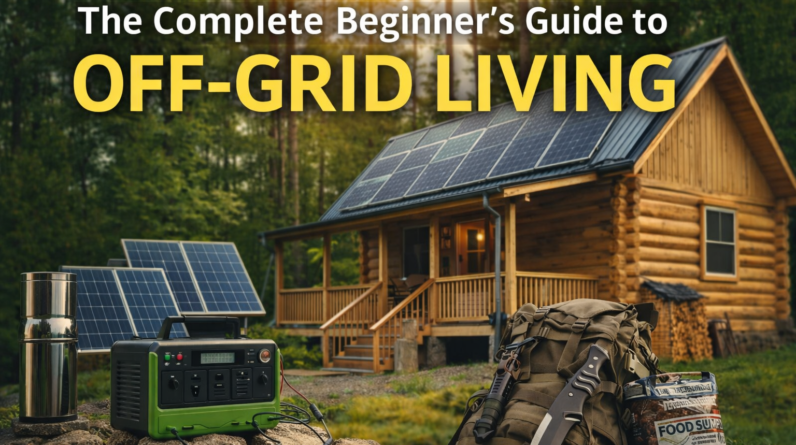
The Complete Beginner’s Guide to Off-Grid Living
Introduction: What Does Off-Grid Living Really Mean?
Off-grid living means disconnecting from public utilities and becoming self-sufficient in key areas of life — energy, water, food, and shelter.
For many people, it’s not about isolation.
It’s about independence, preparedness, and resilience.
Whether your goal is:
-
Lower living costs
-
Emergency preparedness
-
Greater self-reliance
-
Sustainable living
-
Or simply more control over your future
This guide will walk you through everything you need to know to begin.
1. Choosing the Right Location
Your land determines your success.
Consider:
-
Sun exposure (critical for solar power)
-
Access to water (well, spring, rain catchment)
-
Soil quality (if growing food)
-
Local building regulations
-
Climate and seasonal extremes
Beginners often underestimate local laws — always check zoning and building permissions before purchasing land.
2. Power Systems: How to Generate Your Own Energy
Most off-grid homes rely on solar power.
Basic Solar Setup Includes:
-
Solar panels
-
Charge controller
-
Battery bank
-
Inverter
Backup options:
-
Wind turbines
-
Micro-hydro (if water source available)
-
Generator (emergency backup)
Start small. Expand as needed.
3. Water Collection & Purification
Water security is non-negotiable.
Options include:
-
Drilled well
-
Rainwater harvesting systems
-
Nearby spring (with filtration)
Always include:
-
Sediment filtration
-
Activated carbon filtration
-
Emergency purification method (boiling or purification tablets)
Water storage is just as important as collection.
4. Food Independence
Start with realistic goals.
Beginner food systems:
-
Raised bed vegetable garden
-
Basic herb garden
-
Chickens (eggs)
-
Food storage pantry
Long-term planning may include:
-
Root cellar
-
Dehydration systems
-
Pressure canning
-
Freeze-dried storage supplies
Food storage is as important as food production.
5. Heating & Shelter
Heating options:
-
Wood stove
-
Propane heater
-
Passive solar design
Insulation reduces your energy needs dramatically.
A well-insulated cabin with a wood stove can operate efficiently even in harsh winters.
6. Communication & Emergency Preparedness
Going off-grid does not mean being disconnected.
Essential tools include:
-
Emergency radio
-
Two-way communication devices
-
Backup power banks
-
First aid kits
-
Emergency medical supplies
Preparedness is peace of mind.
7. Common Beginner Mistakes
-
Overspending at the start
-
Underestimating maintenance
-
Ignoring local regulations
-
Failing to build emergency reserves
-
Trying to do everything at once
Start small. Expand methodically.
8. Is Off-Grid Living Right for You?
Ask yourself:
-
Are you prepared for manual work?
-
Can you handle uncertainty?
-
Are you comfortable troubleshooting systems?
Off-grid living rewards resilience and planning.
Final Thoughts
Off-grid living is not about escaping society.
It’s about building independence, preparedness, and long-term security.
With proper planning, realistic budgeting, and gradual implementation, anyone can begin the journey toward self-sufficiency.

